
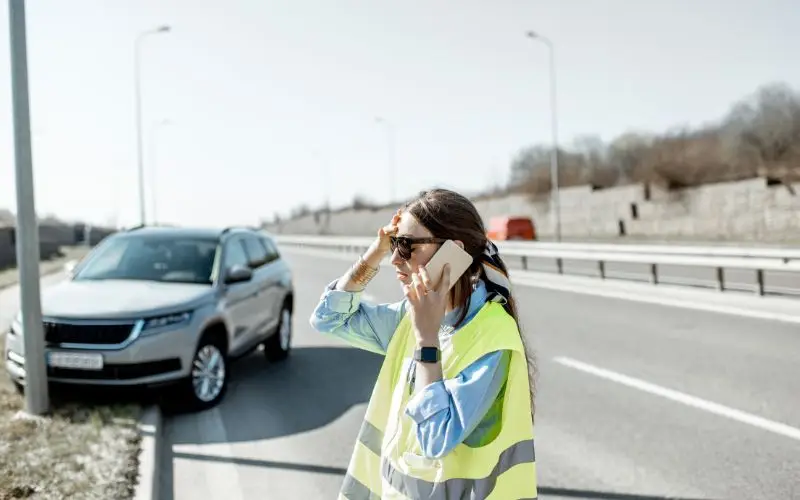
A breakdown on a smart motorway is definitely stressful, especially when there isn’t any normal hard shoulder. A simple problem can easily become an emergency because of how fast cars go, how many lanes there are, and where there is no place to stop.It’s important to stay calm first of all.If there is a problem, look to a safer area like a service area or emergency area if it is safe to do so. Do not if possible, move to the far left, switch your hazard lights on and call for assistance. The Highway Code sets out three simple rules that drivers should follow: “Get left”, “Get safe” and “Get help”.In this guide, we shall discuss how you should react when your car breaks down on a smart motorway, how to stay safe until help arrives, and how to avoid getting stranded by maintaining your car properly.
What is a Smart Motorway?
The technology of smart motorways controls the flow of traffic and motorway capacity. Variable speed limits and emergency areas and lanes, controlled by overhead signs, may be found in various places along the section. An important component is the red X sign. Red X – Lane closed. Do not cross or proceed in a lane with a Red X. Some sections of the motorway are designed to have emergency zones. These are usually indicated with blue signs featuring an orange SOS telephone symbol and allow the vehicle to stop during an emergency. Understanding the following features prior to a trip can make a breakdown much easier to cope with.
How to behave in case of a breakdown on a SMART motorway
1. Attempt to get into a safer area.
If your car starts to have trouble, if you can move your car, don’t wait until it comes to a complete stop.Where possible, get off the motorway at the next exit or come into a service area. If this is not feasible, search for an emergency area. Provided that the vehicle is still capable of moving safely, begin moving the vehicle towards the left-hand side. However, do not make any sharp movements since other vehicles will not be expecting such a maneuver.The best place to stop is a parking spot. Service areas on motorways are safer for stopping than roadside areas.
2. Switch On Your Hazard Warning Lights
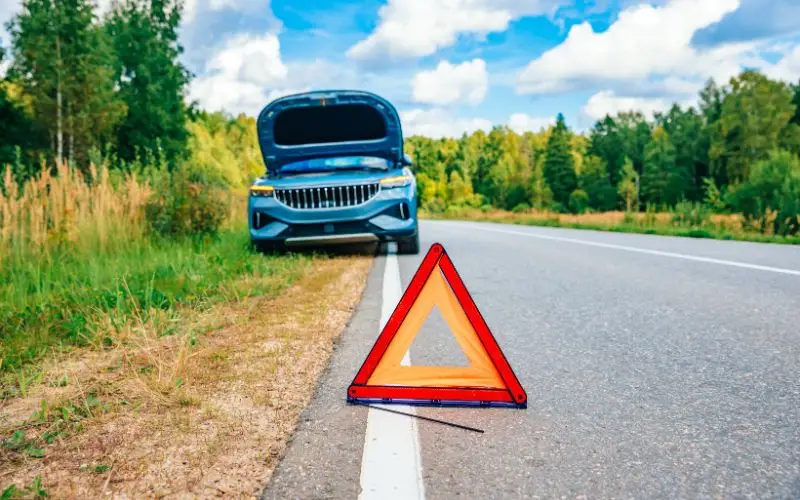
If you’ve a problem, make your automobile as visible as possible.Switch on the hazard warning lights. Use sidelights where needed and/or if dark conditions or a lack of visibility makes it necessary. Avoid installing a warning triangle on a motorway. This is a risk as entering the live carriageway on a smart motorway is unnecessary, according to the previous official guidance.
3. If it is safe, leave the vehicle.
In an emergency area or in another appropriate area, if it is safe to leave, evacuate through the side away from traffic.If there is a safety barrier, cross it and go behind it. Stay away from traffic and vehicle traffic. Wait downwind of the vehicle until it is recovered.The Highway Code recommends that motorists stay clear of moving traffic and be vigilant to cars approaching the stopped car.
4. If it is not possible to escape safely, stay inside.
Occasionally, leaving the car in the vehicle is more risky.In any case, your car might be parked in the lane where the traffic is allowed to pass through, or else there might be too much traffic to allow you to open your door. In such a situation, do not forget to wear your seat belt and call 999 immediately.The Highway Code’s guidance applies when motorists can’t get to a place of ‘relative safety’.
You need to be safe – not inspect or repair the vehicle yourself
Guidance on what to do if your car breaks down on the motorway.If you are safe, call the appropriate source of assistance.Use the emergency telephone if available, in an emergency area. Read the instructions before getting back on the motorway.
A breakdown recovery provider can also be called for help. Provide them with as much information as you can, such as:
-
The number that your motorway uses
-
Your direction of travel
-
Your nearest junction
-
The area where you are going to be traveling or stopping.
-
The information on marker posts can be found nearby.
-
Your vehicle registration
-
Your vehicle type
-
The issue that the vehicle is encountering.
-
Irrespective of whether there are any people with you
Accurate data on your location may help recovery teams to find you faster. In case you are a vulnerable motorist who travels alone or is immobile, make sure to state so when requesting assistance.
The top causes of breakdowns along motorways
It can take a few minutes or even just a few hours for a breakdown to occur. But there are a few problems that are particularly prevalent.
Flat or Weak Battery
Car problems can stop the car from starting. Warning lights and other issues may also occur due to electrical faults. When weather conditions are extreme, checking batteries becomes a more critical job.
Tyre Problems
Tyre pressure and tyre punctures might cause a major problem on the highway.One should keep a check on tyre pressure and tread before long journeys.
Running Out of Fuel
Low on fuel is something that can be prevented, but does occur.Before embarking on a long motorway trip, be sure to check the fuel level and know where you can stop for a fill-up.
Engine (or Mechanical) Issues
Excessive heat, lights, power loss and abnormal sounds may be signs of mechanical issues. When your car starts to exhibit symptoms that something is amiss, don’t shrug them off, just because it is moving.It is possible to avoid a road side emergency by arriving at the next safe point from the motorway by leaving with a minor fault.
Keep Safe in the Meantime
Waiting to get well can be frustrating, but there are many things you can do to lessen the chances of getting hurt.
-
First, try to stay out of the way of cars in a safe place.
-
Second, have a mobile phone with you—and preserve the battery if you need to wait for help.
-
Third, update the recovery operators when you move.
-
Four: Don’t try to make unnecessary road repairs.
Doing routine mechanical work next to traffic on a motorway is not the place.Emergency services may have to get involved if your vehicle is in an unsafe position. Do not put your life on the line for your vehicle.
What if your car breaks down in a live lane?
This is among the most risky scenarios for a driver. In case the car cannot be moved either towards the right or in an emergency lane, then switch on the hazard lights and dial 999.Walking through active lanes is a bad idea. It is not POSSIBLE TO WALK DOWN THE MOTORWAY FOR ASSISTANCE. Never force the vehicle unless instructed to do so by emergency service personnel or other individuals with authority.If a driver cannot leave their car safely they are required to stay in and keep wearing the safety belt and call the emergency services (Highway code 94).
Ezee Recovery can help you with the following recovery options:
When you’ve got yourself in a safe spot, professional recovery can handle the vehicle handling part of the situation. Ezee Recovery offers Breakdown Recovery, Emergency Roadside Assistance, Car Recovery, Van Recovery and Motorcycle Recovery 24/7. It also has a number of other services listed, such as flat battery assistance and jump start service, tyre assistance, vehicle towing and fuel delivery. Ezee Recovery also offers vehicle transportation and long-distance recovery for those requiring longer distance transportation of their vehicles. It will also be of great benefit when the safety of a particular vehicle makes it impossible to operate and requires relocation. The company is famous for their timely service and emergency service available round the clock. Additionally its web site says that response time may vary depending on traffic and location, especially if vehicles are located on busy motorways. The goal is always to keep the motorist safe. Recovery comes next
Real-Life Breakdown Scenarios
Scenario 1: The warning light comes on.
In scenario 1, the warning light is illuminated.
You are in a car on a broad motorway travelling through the countryside when the engine warning light comes on.
The car is still operating so you continue to drive it.
The better way is to minimize the risk that is not necessary. If the vehicle seems to have serious problems, exit at the next safe place or stop at an appropriate place if possible.
If a live lane breaks down, it can be prevented if action is taken early.
Situation #2: Flat Battery after Stopping
Your car gets to a safe place; however, it will not start.
If the fault is a flat battery, then battery assistance or a jump start service could be the solution, depending on the vehicle.
In some cases, car recovery or vehicle towing might be necessary if the vehicle is not safely restartable.
Scenario 3: Tyre Failure
Your tyre has a fault and you have to stop.
Never attempt to change a tyre next to moving motorway traffic unless you are in a ‘true safe position’ and it is appropriate.
Rather, go to a place of relative safety and set up tyre assistance or recovery.
Tips for Avoiding Breakdowns on the Motorway
Prevention starts even before setting off on the motorway.Regularly check tires for any wear and tear.Check for damage, excessive wear and improper pressure. Before setting out on a long trip, look at your fuel gauge. Take care that warning lights do not come up.
Ensure your battery is well maintained, particularly if slow starting. Check fluid levels according to manufacturer guidelines. It’s also advisable to have your mobile phone charged up and ready, and your recovery provider’s details at hand.In the Highway Code the drivers are expected to have basic items like high-visibility clothing and a charged mobile phone, as well as their vehicle being roadworthy.
Tips for reducing costs:
A motorway recovery doesn’t have to be an expensive occurrence. Prevention is the best cure. Simple checks and maintenance can help find issues before a long trip.When asking for a quote, include a clear explanation of the situation if a recovery is needed. The cost can depend on factors such as the vehicle, distance and circumstances.Ask before committing to more work what help is needed. Transparent pricing also helps to maximize the understanding of the potential cost prior to recovery.If it is a long distance, consider what other feasible ways there are to get to the destination instead of assuming that the vehicle needs to be repaired at the roadside.
Tips from the Pros: Don’t let “Safety” get ahead of “Speed.”
The worst thing to do in case of a vehicle breakdown on the motorway is to dwell on the vehicle. You can replace and retrieve your vehicle. Your safety cannot. Take the opportunity to turn left if it is possible. Look for a safer place to stop. Avoid using moving traffic when it is safe to do so. After that, make arrangements for professional help.Keep in mind that emergency areas should be used in emergencies. Do not re-enter the motorway until you have stopped at the point and called the emergency telephone and followed instructions.
Do not go into a lane with a Red X.
Do not cross any live lanes on the motorway.
Do not unnecessarily stand next to moving traffic.
Conclusion
Ride Raps (0077) can provide assistance to anyone who breaks down on a smart motorway, and it can be a dangerous situation, but knowing what to do can make it much safer.If possible, go to a service area or emergency area.If it is possible to move safely, move to the left and turn your hazard lights on but do not move through moving traffic. In case you are unable to get to a safe area, do not move out of your car but call 999. Preparation is important too. Check your tyres, battery, fuel and general vehicle condition before long journeys. Ezee Recovery delivers 24 hour roadside breakdown services, vehicle recovery services and other services listed above throughout the UK. Its reputation for quick response, skillful drivers, controlled vehicle handling and clear pricing can be of use on the day when things don’t go as planned.The bottom line is that you are better off protecting rather than recovering.
FAQs
After having a breakdown on a smart motorway, what should I do?
Turn on your hazard lights and see if you can get out of the way by moving towards the left.
Can I make a halt in a smart motorway where there is no hard shoulder?
Emergency situations call for you to stop your vehicle. You should enter the emergency zone if there is a problem with your car.
What should I do if my car stops working while I am on an active lane of the motorway?
Flash your warning lights and ring 999 immediately if you cannot get out of your car.
Would it be possible for me to call a recovery service after breaking down on the highway?
Yes. After you have reached a secure position, you could contact a professional recovery firm. Ezee Recovery provides 24-hour breakdown recovery, emergency roadside assistance, car recovery, towing and other recovery services listed below.
How can I prevent myself from having a breakdown on the highway?
Before driving, ensure that your tyres, battery, fuel, and car are in good condition.
How can I provide a recovery service with details of my location?
Motorway name, direction of travel, nearest exit point, and any other local markers should be provided.
Is it safe to carry out any work to fix my car on a motorway?
It is advisable that you do not undertake any unnecessary work while in the middle of traffic on the motorway.